|
|
Acupuncture Center Love Yourself ~ with great body, mind, and soul! |

|
[ History ]
History of the Nation of China and Its Medicine (Part I) By Dr. Chung-Hwei Chernly 10/27/03
At the end of the hundred and fifty days of the global flood, the water had gone down and Noah’s Ark landed and rested on the mountains of Ararat. Six more months later, when the earth was completely dry, Noah and his wife, and his three sons and their wives, total eight people came out of the ark, and brought out different kinds of living creatures that were with them. They started to multiply on the earth and were fruitful and increased in number.
Noah’s three sons, Shem, Ham, and Japheth, who had their own sons and offspring after the flood, created three different clans called the Shemites, the Hamites, and the Japhethites, respectively. Their clans scattered to form the nations according to their lines of descent. From these, the nations, they spread out over the earth after the flood. The Japhethites moved to Europe and became the fathers of Caucasians; the Hamites moved to Canaan and Africa, and became the fathers of Africans; and the Shemites stayed on both Middle East and Far East of Asia and became fathers of Asians.
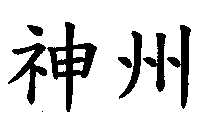
Five thousands
years ago, a nation in Far East of Asia was built. It was China, also called
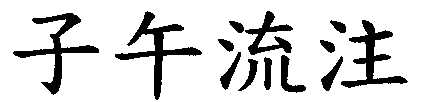
“
For example,
the character “
China is one
of the oldest nations on this earth. In its history chronicle of five
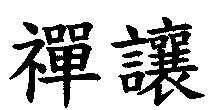
thousand years, we can distinguish it as two eras: the pious era, which is
the first twenty five hundred years, and the rebellious era, which is the
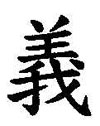
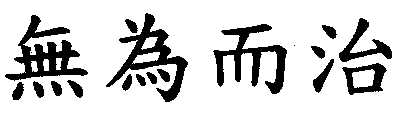
last twenty five hundred years. In the pious era, the Chinese people were
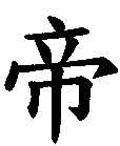
actually ruled by God, or called Reign of God. From the character “
Chinese medicine had already developed very well in this era. There were different departments, such as Internal medicine, External medicine, Pediatric, Geriatric, Ob/Gyn, Dermatology, and so on. Because those devout people found favor in the sight of the Lord, and because the fear of the Lord is the beginning of wisdom, and knowledge of the Holly One is understanding, (Proverb 9:10) God gave them all kinds of wisdom, understanding and talents that they could invent compass, gun powder, paper and printing skills. He also gave them different trees and plants, on each side of rivers, the valleys, the plains, and the mountains, bearing many crops of fruits which their roots, stems, leaves, flowers, fruits, seeds, and barks, were all the sources of the herbal medicine, for healing of the nation. On each side of the river stood the tree of life, bearing twelve crops of fruit, yielding its fruit every mouth. And the leaves of the tree are for healing of the nations. (Rev. 22:2)
In this pious era, because those people found favor in the sight of the Lord, God also gave them a gift that they could use the needle, inserting to the certain part of the body, to adjust or stimulate the healing system of the body, and then make the body healed. That gift is we called acupuncture medicine. Even though at that time there was no stainless steel, the material they used for acupuncture including fish bone, sharpen stone, sharpened bamboo stick, copper, silver, gold, iron, alloy, etc.
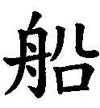
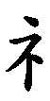
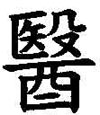
From the
Chinese character ‘
At the end of this era, there was a Dragon, the evil one, which was Satan, who was so jealous, like a thief, intruded into this great nation, and started plodding, seducing the people, to turn away from their God. Then the people became rebellious, and its rebellious era began. The ruler has not been God anymore. A man took God’s position as a ruler. Furthermore, a man, an emperor, himself became a god. That situation continued for two thousand and five hundred years, but it did not end on the Last Emperor.
The curse if you disobey the commands of the LORD your God and turn from the way that I command you today by following other gods, which you have not know. (Deu 11:28) 你們若不聽從耶和華你們神的誡命,偏離我今日所吩咐你們的道,去侍奉你們素來所不認識的神,就必受禍。(申命11:28)
History of the Nation of China and Its Medicine (Part II) By Dr. Chung-Hwei Chernly 10/27/03
Many of us who are interested in understanding more of Traditional Chinese Medicine (TCM thereafter, encompassing acupuncture, herbs, massage, cupping, moxibustion, Tui-Na, Gua-Sha, etc.) and acupuncture in particular may have critical doubts and questions in our mind such as why the theory of TCM is vastly different from modern sciences. For example, the TCM theory constantly refers to Qi – the flow of energy, which is not found in modern western medicine; or the meridians composed of hundreds of acu-points, which don’t even exist according to modern anatomy and physiology. Yet TCM has treated and cured billions of patients using or not using these theories since ancient times. One may ask why the educational systems of TCM didn’t teach students advanced biomedical sciences. To give these questions complete and comprehensive answers, we have to look back to the seemingly perplex yet highly consequential historical background.
In the three centuries before the last feudalist dynasty ended in 1911, this rebelling country- China, went through many foreign invasions, such as Sino-British Opium War (1840-1842AD), Sino-Japanese War (中日甲午戰爭1895), China-Russian War, Anglo-French Invasion of Peking War(1860), China-French War, and Rebellion of Keng Tzu( Eight Nation Allied War 1899-1900AD). China was forced to swallow fiascos in all of those wars. As a defeated nation, China had to pay the prize of a lot of warfare expenses to those foreign countries – billions and billions of ounces of gold and properties. Even worse, China lost many strategically important territories: Okinawa was taken away by Japan; so was Taiwan which had been ruled by Japan for 50 years; parts of the nation - Hong Kong and Cow Long - became British colonies. Over the top of that were many unfair treaties and loss of numerous lives. As a result, this nation became weaker and weaker, poorer and poorer.
The revolutionist, Dr. Sun-Yet-Sen, finally in 1911, successfully overthrew the corrupted and stubborn Manchurian Ching Dynasty – the Last Emperor, and founded the first democratic nation – Republic of China (ROC) in Asia. And in the early years of ROC, a group of “patriots” started various reforming movements, such as the May 4th movements (五四運動1915 – 1919) in order to revitalize the county, making it richer, stronger and more prosperous. They highly propagated, valued and adopted Science and Democracy in a hope to fully westernize this new nation. Mr. S&D (Science and Democracy) prevailed. In that period of time, if anything was considered non-scientific or against democracy, it would face the fate of total elimination and desertion.
The old tradition and culture were all blamed as the cause of the centuries of painful disaster and corruption; therefore those “patriots” decided to throw away all preexisting Chinese culture and old traditions, including Confucius philosophy and Chinese medicine! The theory of TCM has not been modernized by adopting the modern sciences yet, and remained out-of-date and old school thinking as I indicated in Chinese History Part I, which means its theory cannot be proven scientifically, or was considered unscientific. Therefore, they made the same decision to throw Chinese medicine away. Needless to say, it was a big mistake rooted in misunderstanding! The thoughtless ban created a different holocaust and a disaster to the precious TCM and Chinese culture in general.
To make things even worse, in 1925 the Department of National Legislature of R.O.C. passed a law of “Complete Elimination of Traditional Chinese Medicine Act). Despite criticism from dissidents, the TCM practice was largely prohibited and the school systems were dismissed ever since in the ROC. Since then, people who practice Chinese medicine started facing nationwide persecution and prosecution. They lived in fear with no dignity. Not only did they have no more formal education, but they became the second class in the medical field because the government treated them that way. They were thought of as “those who can’t” or the scum and refuse of the society, although their patients were normally respectful and grateful to their Chinese medical doctors as they believed they were the rescuers.
As a result, TCM staggered its way into folk medical practice among the still large number of believers until the communists took over the mainland in 1949.
The destiny of TCM really must be divided into two significantly different geographies – the Republic of China in Taiwan and the People’s Republic of China in mainland after 1949. In Taiwan’s case, nearly nothing changed as it inherited the entire legislature from the old government. In mainland, on the other hand, TCM budded and flourished especially during the otherwise chaotic Culture Revolution during 1966-1976, partly thanks to the lack of western doctors, partly to Chairman Mao Ze Dong’s personal preference.
It was not until President Nixon visited China in the mid-70s that people in the west began to hear and experience the “miracles” of TCM and acupuncture in particular. It sparked for a while in America in the late 70s and early 80s when patients thronged to acupuncture doctor’s clinics and waited in long lines. Gradually, the emerging craze became widespread general interest and underwent serious scrutiny by the medical community. U.S. is a great country in that although there has been theoretical difference; TCM was eventually partly recognized by NIH in the late 1990s because of its superb effectiveness in some cases such as pain management. Despite this groundbreaking progress, we believe TCM should have been applied and recognized in a much wider area than just pain management.
The American democratic and grassroots’ system should be given credit for the well-deserved reincarnation of TCM. Nowadays, many TCM schools are set up in the U.S., 47 states have licensed acupuncturists and there are 16,000 licensed acupuncture practitioners in the U.S. Surprisingly, even many Chinese people come to the U.S. to study Chinese medicine! We can reasonably speculate that in the years to come, the U.S. will be the leader in the TCM field in terms of research and recognition. With that being said, there are definitely many obstacles facing us now such as a lack of insurance compensation, ongoing initiatives to reform the school and continue-education curriculums, the designation of “Doctor” to TCM practitioners and so on.
On the other side of the fence, naturally yet ironically, the patients DO NOT care what the theory is. They are not scientist, FDA members, or Medical board members; they are just suffering sick people. What really spoke to them is that Chinese medicine works and that’s exactly the reason the acupuncture clinics are booming across the country!
Now let’s turn our focus to education, which is the essence of the quality and longevity of any disciplines. Apprenticeship used to be the only way to impart knowledge and train next-generation doctors historically. This situation for TCM persisted for a long time even after the western style schooling became prevalent in China in other disciplines. In mainland – since the foundation of the People’s Republic of China in 1949, especially in late 80’s, government-supported Chinese Medical schools were set up in almost every province and major cities, such as in Shanghai, Beijing, GuangDong, Tianjin, HeBei---. Please check out their curriculum, and you can find the modern biomedicine courses. Overall, in mainland China, TCM has gone such a long way since the 50s that today it has its own university, dedicated research and hospital systems.
In other side of China, Taiwan, R.O.C., Medical Schools of Chinese Medicine were finally re-established in 2000 and are doing very well. From visiting the websites: Chinese Medical University, Taiwan / Curriculum or Chang Gung University, Taiwan and others, you will find hundreds of modern medical sciences as the required courses in their core curriculum. Almost all current regular “western” medical school courses are in their school curriculum.
In conclusion, the clinical evidence of TCM is extraordinary, and has been like that for thousands of years. Although general pain such as migraine, neck pain, shoulder pain, lower back pain, etc. are most frequently treated in the clinic, the application of TCM is comparable to western medicine (please refer to Patient Testimonials in this site). Moreover, it is preventive as the doctors view the body as an integrative system. The success of TCM is merely a matter of time. When it comes to its educational foundations, fortunately, we are joyfully witnessing in the regions where TCM is more embraced such as U.S. and China, there are more and more core medical sciences incorporated into the curriculums as well as rigorous examinations and licensing systems in place. We are anxiously expecting more to come!
But you, O LORD, be not far off; O my Strength, come quickly to help me. (Psalms 22:19) 耶和華啊,求你不要離開我!我的救主啊,求你快來幫助我!(詩篇22:19)
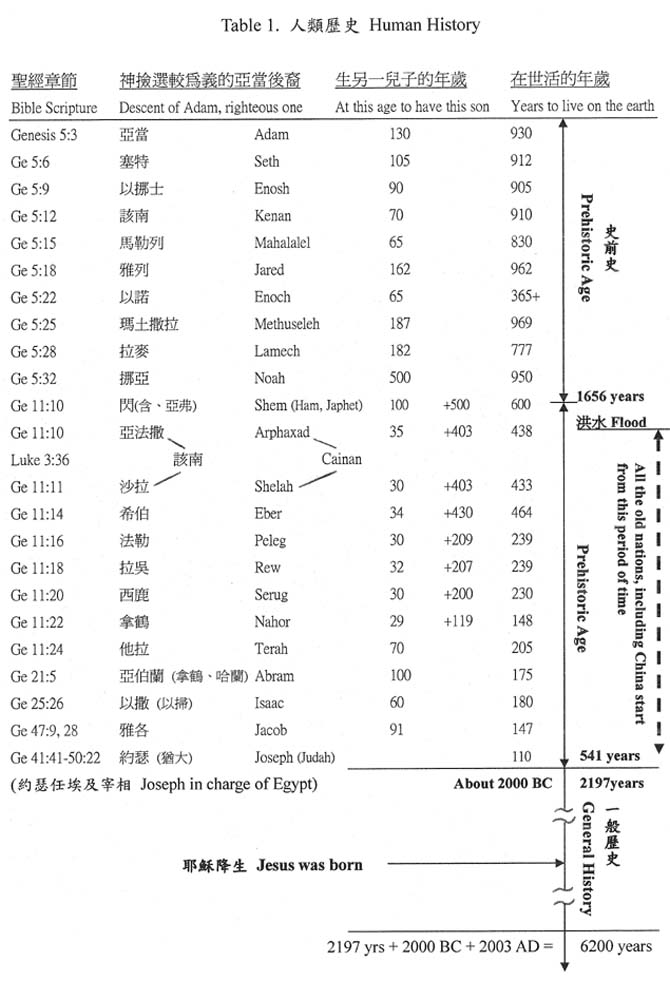
Table 1. Human History
|
 )
)






|
For to us a child is born, to us a son is given, and the government will be on his shoulders. And he will be called Wonderful Counselor, Mighty God, Everlasting Father, Prince of Peace. (Isaiah 9:4) 因有一嬰孩為我們而生,有一子賜給我們,政權必擔在祂的肩頭上。祂名稱為奇妙策士、全能的神、永在的父、和平的君。(以賽亞書9:6) All rights reserved © Acupuncture Center |